I have staged eight apartment living rooms under 200 square feet, and the honest answer to how to make a small living room look bigger is not a demolition permit or another storage cube. It is a three-plane problem: floor, walls, and sightlines, all fighting each other. Fix the way those planes talk to each other and most rooms open up on a single weekend, before you spend a cent on new furniture.
Table of Content
- Why Your Small Living Room Looks Smaller
- How to Arrange Furniture Without Feeling Crowded
- Which Colors Make a Small Living Room Bigger
- How to Borrow Light in a Small Living Room
- Biggest Mistakes in Small Living Room Layouts
- What Actually Works vs What Wastes Money
- Weekend Plan for a Bigger Living Room
- Small Living Room Questions People Ask Most
Why Your Small Living Room Looks Smaller
Three visual traps that eat space quietly
Most cramped living rooms are not squeezed by one giant sofa; they are eroded by three repeating traps. Chopped-up floor space, a walking path that forces you to backtrack, and a passage you have to turn sideways to squeeze through. I once measured a Brooklyn studio where widening the main path from 18 to 30 inches changed nothing about the walking time, yet every visitor said it felt bigger. Perception follows ease of movement, not square footage.
The second trap is visual weight. Dark, low, chunky furniture absorbs light and reads as crowded, while pieces with visible legs, reflective tops, or low backs keep floor visible and push the eye outward. The third is fragmentation: three floor tones, four metal finishes, five crooked frames. Your eye registers not a room but a pile of pieces. Nailing the rug size for small rooms is the fastest single fix here, because a badly scaled rug makes even a correct arrangement look crooked.
Why 180 square feet can feel tighter than 120
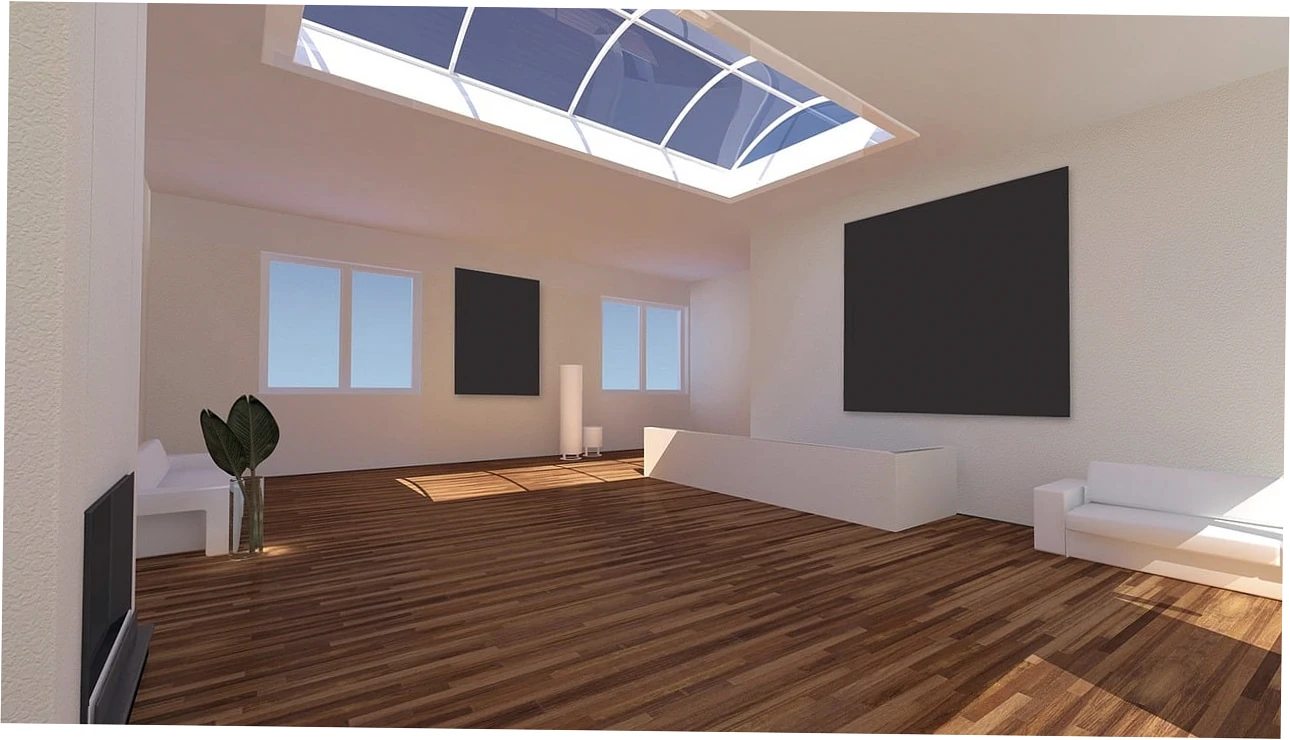
I have toured living rooms that measured 180 square feet and still felt more closed-in than a 120-square-foot one. The difference is almost never area; it is storage. When books, throws, remotes, and charging cables have no home, they scatter across floors, counters, and sills like gravel. One narrow cabinet with doors hides more visual noise than three open baskets, and it consumes wall space instead of floor.

How to Arrange Furniture Without Feeling Crowded
Start with one focal wall and one clear path
Pick a focal wall, usually the television or the window, then build around it instead of spreading pieces evenly along all four sides. A clear small living room furniture layout always has a point of view: one main wall, an L-shaped or U-shaped grouping, and one path that stays open. Lock the sofa first, then let side tables, shelving, and plants claim the leftover corners. Every object should have a reason to be exactly where it is.
Path width matters more than furniture size. An adult needs roughly 30 to 36 inches to walk comfortably; 18 inches is the sideways-shuffle minimum. If a route makes you turn your shoulders, it is not a real path, it is a wall. I have watched living rooms gain what felt like three extra feet of width just by angling an armchair 45 degrees, because the walkway suddenly led into the room instead of into a sofa leg.
Should the sofa hug the wall or float?
Against the wall frees floor, but it flattens the room. Where you have room, pull the main sofa 8 to 12 inches off the wall so soft shadows form behind the television and around the seating, adding a layer of depth. I left a sofa flush for six months out of stinginess with space, then moved it and finally got a living room instead of a waiting area. Avoid the other extreme: gaps beyond 18 inches start to look accidental rather than intentional.

How big is too big for seating
One generous armchair often replaces two mediocre ones without chopping the room into pieces. Low backs are especially useful because your eye travels over them, keeping the space readable. We eventually replaced every seat in my apartment with leg-forward styles, less for looks than for the discovery that a bare hardwood floor photograph of the same corner looked measurably more open. Visible floor is perceived space.

Which Colors Make a Small Living Room Bigger
Why a single tonal family wins
When walls, trim, and curtains sit close in value and unified in hue, you erase the hard boundaries that make a wall read as separate surfaces. Practical small living room color schemes are rarely stark white; they lean toward oatmeal with linen, or pale gray-blue with nearly matching trim. I painted the identical room twice and the oatmeal version read wider and warmer, mostly because the eye stopped jumping at every line.
Do dark walls really shrink a small room
Not necessarily. One dark wall surrounded by light ones pushes the gaze backward, so the room reads deeper rather than tighter. The trick is restraint: one wall only, and not the wall facing the window, or you kill the daylight that is doing the heavy lifting. I have seen a single deep green wall behind a low white sofa make a 150-square-foot room feel warm and layered rather than moody and oppressive.
What about ceilings and floors
Light ceilings paired with light walls make a room feel taller, while floors one or two shades deeper than the walls ground it. Do not overshoot. Charcoal floors against cream walls slice a room in half visually. Keeping everything within a two-step value range makes the envelope feel continuous, which reads bigger even when nothing structural has changed. Prices for paint, curtains, and rugs vary by region, so treat any budget number as an estimate, not a promise.
How to Borrow Light in a Small Living Room
Hang curtains high to fake ceiling height
Mount curtain rods 6 to 8 inches above the window frame and extend them 6 to 8 inches past each side. This does not change the glass, but it pushes the visual height line up roughly a foot, which is the cheapest enlargement trick in the book. For floor-length panels, favor linen or airy weaves so the transition from wall to floor softens instead of slicing the room into a hard horizontal cut.
What mirrors should actually reflect
A mirror helps most when it reflects light or open floor, and hurts when it reflects clutter, a second mirror, or a nest of cables, which simply doubles the visual noise. Position it across from a window or a bare wall, then keep that reflected zone empty. I once hung a full-length mirror opposite my sofa and it magnified a laundry pile; moving it to a side wall turned it from a problem into a tool.
Send storage upward instead of outward
Vertical storage barely touches the floor while pulling the eye up. Swap short, scattered cabinets for narrow bookcases and wall-mounted systems that run close to the ceiling. Renters repeatedly describe floor-to-ceiling curtains, tall plants, and vertical art as bigger wins than one more small piece of furniture, because these elements take up wall real estate rather than precious floor area.
Where to place lamps for maximum effect
Several low-wattage sources beat one overhead fixture. Lamps placed near the baseboards or behind plants broaden the room; upward throws against a wall emphasize height. Harsh cool light from above flattens everything into an office. Swap bulbs to a warm color temperature, keep the ceiling light as backup, and let table and wall lamps carry the evening. Shadow is a friend in small rooms, not a problem.
Biggest Mistakes in Small Living Room Layouts
Sizing errors that cost you a walkway
People buy the largest piece they can get through the door, then regret it on moving day. Measure three things before checkout: door width, path width, and the rug size you actually want. Reclining sectionals consume far more depth than straight sofas. I have watched living rooms flip from comfortable to shimmy-tight over a 40-inch-deep couch when the 34-inch version would have seated the same number of people.
Check warranty and return windows first
Read the return policy before you pay. Most retailers accept unused, unassembled returns within 30 days, but sofas and custom curtains are frequently excluded, restocked with a fee, or required in original packaging. I learned this the hard way at day 34 with a custom curtain panel labeled as a made-to-order item. Writing down the warranty terms and return deadlines before ordering is worth more than the discount you were chasing.
The urge to add one more storage piece
Adding storage feels responsible, but it often subdivides a small room. A single shallow cabinet along one wall works; four small units marching down the same wall just create rubble. Owners of compact flats often report the same reversal: they eventually traded a row of low cabinets for one tall unit with doors, keeping vertical capacity while returning floor to the room.
What Actually Works vs What Wastes Money
The three upgrades worth funding first
On a tight budget I would spend in this order: one or two lamps that fix the lighting, a correctly hung curtain panel, and a rug that fits the seating. Those three change light, height, and floor at the same time, which is why they pay back fastest. Paint, by contrast, is cheap and powerful but depends entirely on lighting; a beautiful color goes gray in a badly lit room.
Trendy fixes that tend to disappoint
Not every space hack survives contact with reality. A projector fades on anything but a white wall unless you add a screen, gray rental flooring reads colder and smaller when paired with cool walls, and mirror tiles in a dim room just duplicate the gloom. Dark paint can genuinely work, provided the room has light to spare. There is no free trick, only trade-offs.
| Change | Typical cost | Visual payoff | Best when |
|---|---|---|---|
| Raise and widen curtain rods | $30-$120 for hardware | High | Ceiling feels low |
| Right-size area rug | $120-$600 | High | Furniture floats on bare floor |
| Repaint walls and trim tone-on-tone | $150-$800 | Medium to high | Daylight is already decent |
| Swap ceiling bulb for layered lamps | $60-$300 | Medium | Evening use dominates |
| Buy more storage furniture | $100-$500 | Low to negative | Clutter has no home yet |
| Strategy | Effect on perceived size | Works best with | Watch out for |
|---|---|---|---|
| Tone-on-tone light neutrals | Strongest and most reliable | Limited natural light | Reads flat without texture |
| One dark accent wall | Adds depth, not width | A clear focal wall | Absorbs light near windows |
| Warm mid-tone walls | Moderate | North-facing rooms | Heavy against dark floors |
| High-contrast black and white | Often reduces perceived size | Large rooms only | Hard horizontal lines |
| Popular claim | Reported reality | Verdict |
|---|---|---|
| Push every piece against the walls | Pulling the main sofa out 8-12 inches adds depth and still leaves a usable path | Myth |
| A bigger TV always overwhelms a small room | A wall-mounted screen often frees more floor than a deep media console does | Depends |
| Mirrors always double the space | They help only when reflecting light or open floor; reflecting clutter makes rooms busier | Depends |
| Dark paint shrinks any small room | One dark wall behind light furniture can make a room read deeper and warmer | Partly false |
| Every furniture foot must sit on the rug | Front legs on the rug is usually enough in compact rooms | Overstated |
Weekend Plan for a Bigger Living Room
Saturday morning: empty, measure, sketch
Carry out everything that can move, including the rug and any spare chairs. Measure the room, the doorways, and the longest wall, then sketch the layout on paper or a phone app with the main path marked at 30 inches minimum. This step enlarges nothing on its own, but it stops every later decision from being a guess. Fifteen minutes of measuring prevents a weekend of shoving furniture around.
Saturday afternoon: fix light and floor first
Install the higher, wider curtain rods, then switch bulbs to warm, dimmable options. Change nothing else and step back. Most rooms read noticeably brighter at this point; if yours looks worse, the problem is probably bulb temperature rather than your taste. Note what still feels tight, because that list is where your remaining effort belongs.
Sunday: rebuild, then photograph the result
Return the furniture starting with the focal wall, keeping the walkway open as you go. When everything is back, step back three paces and take a photograph. The camera catches the clutter your brain edited out while standing inside the room. Finish by clearing counters down to three objects, so floor, wall, and ceiling all read as clean planes, and the room stops arguing with itself.
If you want to go deeper on the two areas that change the most, follow the paths that tighten up seating placement and floor planning before you buy anything new. Repeat the same sequence seasonally, since a layout that worked in winter with heavy textiles often needs a lighter edit in summer, and small rooms reward that kind of ongoing tuning far more than they reward one dramatic purchase.
Small Living Room Questions People Ask Most
Can you really make a small living room look bigger with just styling?
Yes, within limits. Perceived size is driven by light, proportion, and clear sightlines, not by tricks. The highest-return moves are a 30-inch walking path, curtains mounted near the ceiling, a correctly sized rug, and one unified color family. You are not changing the measurements, only how the eye reads them.
Will dark walls make my small living room feel cramped?
Not automatically. A single dark wall surrounded by light surfaces pushes the room deeper and can feel cozy rather than tight. The risk appears when all four walls go dark or when the darkest wall faces the window, because you lose the daylight that makes the depth readable.
Where should a mirror go in a small living room?
Put it where it can catch daylight or open floor, typically on a side wall angled toward a window or a bare wall. Avoid spots that reflect a television screen, a pile of laundry, or another mirror. A badly placed mirror doubles the mess instead of the space.
What should I measure before buying furniture for a small room?
Measure your doorways, your main walking path, and the rug size that fits your seating. Then read the warranty and return window, because sofas and made-to-order curtains often carry exceptions, restocking fees, or strict packaging rules. Those few minutes save both money and moving-day frustration.
Does a bigger rug make a small living room feel larger?
Usually, yes. A rug that is too small leaves furniture floating and makes the floor look unfinished, while a properly sized one connects the seating group into a single island. Front legs on the rug is typically enough in compact rooms; wrapping the entire sofa belongs in larger spaces.
Is a projector better than a TV in a tiny living room?
It depends on the wall and the light. A projector removes a bulky black rectangle and can free real floor space if you have a blank, light-colored wall and can control daylight. A television wins on brightness and simplicity. Neither is universally better; match the choice to how you actually use the room.
Should I repaint or replace curtains first?
If your windows are small or hung low, curtains usually pay off faster and cheaper. Paint shapes the whole envelope, but it depends on decent lighting to look right. In a dark room, a new paint color will read muddy until the lamps and curtains are sorted out first.