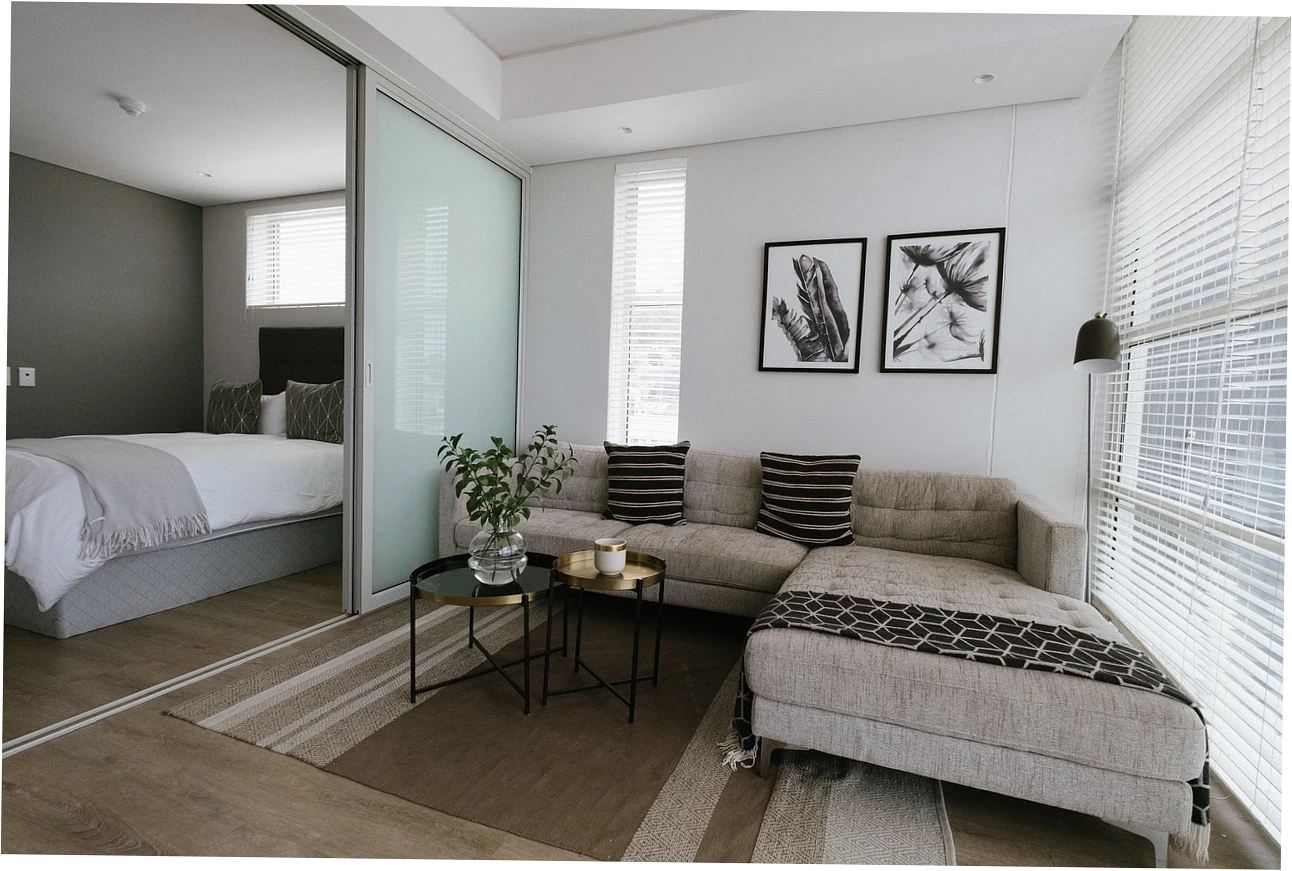
When I finally admitted that my 9-by-10-foot bedroom couldn’t hold a full-size dresser on the floor, the question of where to put a dresser in a small bedroom stopped being a design choice and became a survival puzzle. After testing four layouts and living with each for a month, my honest answer is this: the best spot is almost never against a bare wall where it eats your walking path. Put it inside a reach-in closet if the depth allows, slide a tall narrow version into the gap between your bed and closet, or replace it entirely with a drawer-equipped nightstand or storage bed. This isn’t about squeezing furniture in; it’s about protecting the 24 to 30 inches of clear floor you need to move without bruising your hip. If you want the full system for dealing with too much stuff in too little space, start with a small bedroom organization guide before you move a single drawer.
Table of Content
Where to Place a Small Bedroom Dresser
Map Your Walking Path First
Before you pick a wall, trace the route you take from bed to door to closet. A dresser placed in that path feels like a traffic cone in a hallway, no matter how pretty it looks. I once shoved a six-drawer dresser opposite my bed and spent three weeks side-stepping it every morning. The fix was measuring the swing of my closet door and the clearance beside my bed—both needed at least 30 inches. If your room has two entry points, the arrangement gets trickier, and you’ll want to study a two-door furniture layout so you don’t block a secondary exit.

Measure the Dresser Against Your Bed
Here’s a trick I wish I’d known years ago: if your dresser must sit beside the bed, match its height to your nightstand. A 30-inch dresser next to a 22-inch nightstand creates a visual cliff that makes the whole room feel off-balance. Better yet, treat the dresser itself as the nightstand on one side—just keep the top surface clear for a lamp and your phone. When I tried this, I reclaimed 18 inches of floor space and the room instantly breathed easier. The goal isn’t symmetry for its own sake; it’s keeping sightlines low and even.
Use the Closet as a Dresser Slot
If your closet is at least 24 inches deep and you can spare the hanging rod, sliding a dresser inside is a game-changer. You keep the storage but remove the bulky footprint from your bedroom floor. I’ve done this in two rentals, and both times the room felt twice as large. You’ll need to leave the closet door open or remove it entirely, but that’s a small price for reclaiming your walking space. Just avoid putting a dresser in front of a closet that already holds your only hanging clothes—you’ll create a daily wrestling match.

Best Spots vs Worst Spots for a Dresser
The Closet Nook That Frees Floor Space
Best spot: inside the closet, tucked against a side wall so you can still reach the back. This works especially well if your closet has a bifold door you rarely close. Second best: the narrow strip between the foot of your bed and the wall, but only if that strip is at least 36 inches wide. Worst spot: directly opposite the bed. It becomes the first thing you see and the last thing you squeeze past. I tested this with a low, wide dresser and still felt boxed in.
The Wall Opposite the Bed: Tempting but Tricky
That blank wall across from your bed looks like an invitation, but it’s usually a trap. A dresser there turns your main walking lane into an obstacle course. The only time it works is when your bed is pushed into a corner, leaving a wide open floor. Even then, keep the dresser under 40 inches wide and no deeper than 18 inches. If you’re working with a queen bed, the clearances shrink fast, and a queen bed small bedroom layout guide can show you exactly how much floor you actually have left.

The Corner Next to a Door
Corners feel like free real estate, but a dresser there can block door swing or light switches. I once wedged a vintage hutch into a corner beside my door and had to open the door with my shoulder for two months. The fix is to measure the door’s arc and keep the dresser at least 4 inches clear. A better corner choice is the one adjacent to your closet, where you can use the dresser’s top as a landing zone for folded laundry before it goes on hangers.
| Spot | Pros | Cons | Best For |
|---|---|---|---|
| Inside closet | Removes footprint; hides clutter | Requires deep closet; door must stay open | Rooms under 100 sq ft |
| Between bed and closet | Uses dead walkway; easy access | Needs 30 inches clearance | Narrow rooms with side closet |
| Opposite bed | Visually balanced if low and wide | Blocks main path; feels heavy | Rooms with bed in corner |
| As nightstand | Doubles function; saves space | Limited drawer space; height mismatch risk | Singles or couples with few clothes |
Dresser vs Alternatives in a Small Bedroom
When a Nightstand with Drawers Wins
If you only need a few folded items at arm’s reach, a nightstand with three drawers can replace a full dresser entirely. I switched to this after realizing I wore the same five shirts on rotation. The trade-off is capacity: a pair of nightstands holds about half the volume of a standard six-drawer dresser. But you gain symmetry, floor space, and a place for your lamp. For guest rooms, this is often the smarter call because visitors live out of a suitcase anyway.

Storage Beds That Replace a Dresser
A bed with built-in drawers underneath is the quiet hero of tiny bedrooms. You get the same storage volume without adding a single inch of floor footprint. The catch is cost and weight—good storage beds start around $400 and can be heavy to move. I’ve also seen people use simple under-bed bins, and you can find dozens of space-saving options in under-bed storage ideas. Just don’t overload the drawers; they can sag over time.
Dresser vs Armoire vs Shelving
An armoire takes vertical space but gives you hanging and folding in one footprint. Open shelving plus baskets is cheaper but shows every item, which can feel chaotic. I’ve tried all three, and my ranking for a room under 120 square feet is: built-in closet dresser first, storage bed second, nightstand-with-drawers third, freestanding dresser last. The freestanding dresser is the least efficient use of floor area because it’s a single-function block.
| Option | Floor Space Used | Storage Volume | Best For |
|---|---|---|---|
| Freestanding dresser | 6–10 sq ft | High (6–8 drawers) | Rooms with a spare wall |
| Nightstand with drawers | 2–3 sq ft each | Low to medium | Minimal clothing, guest rooms |
| Storage bed | 0 extra sq ft | Medium to high | Anyone with a small closet |
| Armoire | 4–6 sq ft | Medium (hanging shelves) | Renters who can’t drill |
Why Tall Dressers Fail in Tight Bedrooms
The Visual Weight Problem
A tall dresser adds height without adding usable surface, and in a small room that vertical bulk makes the ceiling feel lower. I lived with a 52-inch dresser for a year and always felt like it was leaning over me. A low, wide dresser—under 36 inches tall—usually reads as a surface rather than a monolith. If you must go tall, choose a narrow depth (15 inches) and a light color, but understand you’re fighting the room’s proportions.
The Walkway Blockage Mistake
Tall dressers are often deeper, which means they steal inches from your walking path. The standard advice says 30 inches of clearance is enough, but in practice I’ve found 36 inches is the comfort threshold for daily movement. When you place a tall dresser opposite the bed, you’re likely dropping below that number. This is where community wisdom and design magazines often clash, and the table below shows why.
| Recommendation | Standard Design Advice | Real User Feedback |
|---|---|---|
| Dresser opposite bed | Creates balance and focal point | Blocks walking lane; feels heavy and cluttered |
| Tall dresser in small room | Maximizes vertical storage | Overpowers the room; better to go low and wide |
| Dresser as nightstand | Unusual but space-saving | Works if heights match; otherwise looks accidental |
| Dresser inside closet | Unconventional; reduces hanging space | Best trade-off for floor space; doors must stay open |
When a Tall Dresser Still Makes Sense
There’s one exception: a genuinely narrow tallboy, often called a lingerie chest, can fit in a walkway where nothing else will. I’ve seen a 12-inch-deep, 48-inch-tall chest slip between a door and a closet with zero impact on traffic. The key is depth, not height. If you go this route, anchor it to the wall—tall narrow furniture tips easily, especially in a room where you’re often pivoting with laundry baskets.
Making Your Dresser Placement Work Daily
Layer Storage Without Adding Bulk
Once your dresser is placed, the real test is whether it stays functional or becomes a clutter magnet. I keep a strict rule: the top surface holds only a lamp, a small tray, and one decorative object. Everything else goes inside. If your dresser has a mirror attached, angle it toward the nearest light source so you’re not doing makeup in shadow. For extra capacity, add over-the-door hooks or a slim rolling cart beside the dresser—vertical layers that don’t eat floor space.
Adjust as Your Room Changes
Furniture placement isn’t permanent. I rearrange my bedroom twice a year, usually when the seasons change and my clothing volume shifts. If you notice you’re avoiding a certain corner or bumping your hip, that’s your cue to move the dresser, not to tolerate it. A furniture slider set costs about $12 and lets you test three layouts in an afternoon. The best placement is the one you stop noticing because it simply works.
Frequently Asked Questions About Small Bedroom Dresser Placement
Can I put a dresser in a closet that’s only 22 inches deep?
Most dressers need at least 18 inches of depth, so a 22-inch closet can work if you remove the door or switch to a curtain. Measure the dresser’s depth plus two inches for the drawer to open without hitting the frame. If you have a standard 24-inch closet, you’ll likely need to give up the hanging rod, so consider a storage bed or under-bed bins instead. The trade-off is usually worth it in rooms under 100 square feet.
Is it better to put a dresser on the same wall as the bed or opposite?
Same wall as the bed, if you have the space. Placing it on the same wall keeps the walking path clear and reduces the visual weight in your sightline. Opposite the bed, a dresser becomes the first thing you see and the main obstacle. The only time opposite works is when your bed is against a side wall and you have at least 36 inches of clearance between the dresser and the bed’s edge.
How do I keep a dresser from making my small bedroom feel cramped?
Choose a low, wide dresser under 36 inches tall, and keep the color light or match it to your walls. Avoid tall, dark pieces that absorb light. leave the top 80 percent empty and use wall-mounted lights instead of a table lamp to free up surface. If you share the room, matching the dresser height to your nightstand creates a continuous horizontal line that makes the room feel wider.
What’s the biggest mistake people make with dresser placement?
Putting a full-size dresser in the main walking lane. I’ve seen this in dozens of small bedrooms, and it always leads to bruised hips and resentment. The second mistake is buying a tall dresser because it fits the wall, without checking whether it blocks the closet door or light switch. Measure your path first, then buy the dresser—not the other way around.
Can a dresser double as a nightstand in a tiny room?
Yes, if the height matches your mattress top within two inches. A 24-inch dresser next to a 22-inch mattress works fine. But if the dresser is 30 inches tall and your bed is 20 inches, it looks awkward and you’ll knock your water glass over. In that case, use a small nightstand on one side and put the dresser at the foot of the bed instead.
How much clearance do I really need in front of a dresser?
At least 30 inches for a standard drawer to open, but 36 inches if you want to walk past while someone else is using it. In a small bedroom, you often can’t hit 36, so prioritize the drawers you open daily. If your dresser is inside a closet, you need zero extra clearance because you open the door and step back.
Should I buy a dresser that matches my other furniture?
Not necessarily. In small rooms, matching sets can feel heavy and showroom-like. A vintage hutch or a painted dresser that contrasts slightly often looks more intentional. The exception is if you’re using the dresser as a nightstand—then matching height matters more than matching color. You can always repaint a secondhand piece for under $30.